

An eighth-grader who never volunteers just deadpanned that his class could buy the whole school if they pooled their money and turned the gym into an ice rink. A group of fourth-graders is cackling about the logistics of an elephant in downward dog. A sophomore is explaining, with real conviction, why a ramen shop banning phones is either the best or worst idea he’s ever heard.
It’s third period, and your class is glittering in genuine discussion. The text that sparked it was less than ninety seconds long.
What makes a short podcast worth classroom time
You’ve already noticed that not all audio is classroom-ready. A podcast earns a place in a lesson when it’s short enough to replay, surprising enough that students want to know how it ends, and real, actual reporting from actual publishers, not synthetic narration. Short, high-interest audio gives every student a way into a text before decoding gets in the way.
That matters more than it used to. Students are growing up unable to assume that what they hear and see online is real, so working with genuine sources, the kind that bring on named experts and say where their information came from, is a skill that outlasts the lesson.
And the stories that do this best are a bit weird.
Weird News: the short podcasts students beg to replay
LingoLift’s Weird News lessons are hook-driven short podcasts about the genuinely strange corners of the world: a bakery that used cookies to catch a burglar, a Goldendoodle that placed in a high school track race, elephants that took up yoga. They’re fun on purpose. They also do real academic work by building vocabulary, information skills, and critical thinking through authentic media.
They’re some of our most-loved lessons, and it isn’t hard to see why. A weird story is the fastest way to get a quiet room talking.


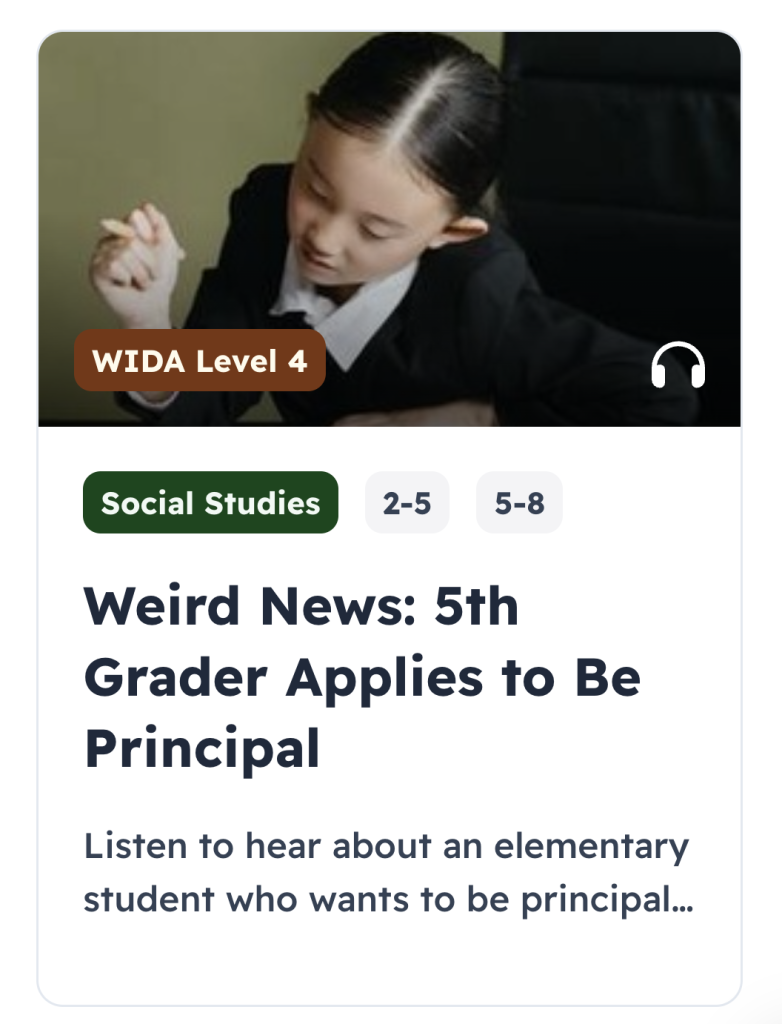
Weird News
Search for Weird News in the LingoLift catalog →
Get the laughter and discussion flowing in just a few clicks.
3 literacy strategies you can try by Friday
These work with any short audio story (you can use them for our videos, too!). The examples use Weird News because a surprising story lowers the stakes, but the critical thinking and summation skills transfer to any text in any subject.
1. Somebody-Wanted-But-So-Then (a summarizing frame)
Summarizing is hard for students to organize, especially out loud. A Somebody-Wanted-But-So-Then chart gives them the structure so they can focus on the content.
Play a short story, one about a whole school going up for sale works well. First just listen, for context. On the second listen, students pause and fill in the frame:
- Somebody: who is trying to do something?
- Wanted: what did they want?
- But: what got in the way?
- So: how did they respond?
- Then: how did it turn out?
For multilingual learners: let students jot the frame in their home language first to catch the plot quickly, then work together to turn it into a short English summary. Have newcomers in your class? You can also check out our complete guide to teaching newcomer English learners here.
2. Contrast and contradiction (an inference frame)
Inference is a sophisticated skill, and students can do it with the right entry point. Teach them to listen for the moment something doesn’t add up, a character acting unexpectedly, or a detail that defies how the world usually works.
Kind of like the elephant-yoga story. Play it. Stop it halfway. Put the sentence frame on the board:
One reason the elephants do yoga instead of just stomping around is ______.
Then think aloud through your own answer, and model two or three different ones, so students see this isn’t about being right. The skill is pausing at the telling moment and justifying a prediction from what they heard. Surprising, silly stories are particularly effective at unlocking this.
3. Scaffolded retelling (a speaking frame)
Speaking in front of the class feels risky, and retelling gives students a low-stakes structure for it. It’s also good practice for the speaking portions of your ELL framework, whether that’s WIDA, ELP, or your state’s.
Use a story students will want to argue about. The ramen shop that banned phones is reliable.
Then:
- First listen: play it at a slower speed with the transcript visible.
- Clarify: students flag vocabulary, idioms, jokes, or syntax they didn’t catch, and the class sorts them out together.
- Second listen: play it again, now that they have the words.
- Retell: students retell it in their own words, with a partner first, then solo.
A realistic note: the first time you ask for a retell, you may get nervous giggles. Totally normal! Let them rehearse with a partner, in their home language if that helps, before anyone goes solo.

Why short audio works, especially for the students who struggle most
Getting students to analyze and discuss a text is hard when the effort of decoding or translating eats all their attention. But your students already know a great deal about the world. They just can’t always show it in English, or on the page, yet.
Listening removes the decoding barrier and gives you a direct line to what a student actually understands. Through a short, surprising story, students build vocabulary, find unexpected connections, and, the part that’s easy to underrate, want to be in the conversation.
This is the same reason listening belongs at the center of content-area literacy, not just in the ELA room.
Built by teachers
LingoLift is a small team, and most of us taught. That shows up in the lessons. We know a good, loose classroom conversation is how you build the kind of community where behavior is easier to manage and expectations actually hold. That kind of learning community gets built through connection, a shared laugh, and an honest reaction to a story.
That’s why the Weird News lessons exist. We’re in early access now, building out a library of short audio texts for listening, reading, writing, and speaking. Try one of these strategies this week, let the ramen debate run long, and may your good dry-erase markers be where you left them.
Get Started Today
Every classroom is a literacy classroom.
That’s why we host 3,000+ lessons designed for listening, reading, writing, and speaking. Every lesson is built on a podcast or videos from our authentic media partners, from NPR to Complexly.
What stories will you share?
Leave a Reply